TechnoBusiness Insights
Jakarta’s Property Market Remains Strong Despite Numerous Challenges
Jakarta’s property market remains well-positioned despite a challenging economy and global environment.

● While mobility is becoming more valuable, TOD is set to shape the next phase of urban expansion.
● “The market’s performance reflects improving fundamentals and evolving occupier priorities.
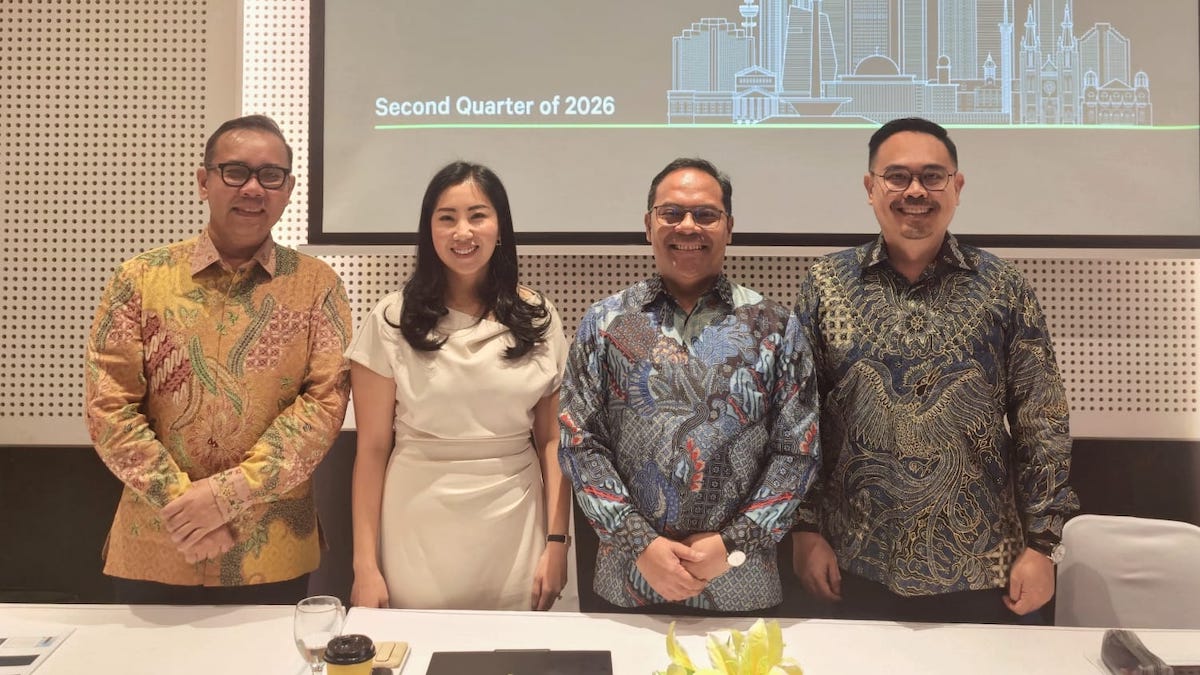
Jakarta, TechnoBusiness Insights ID ● Jakarta’s property market continued to demonstrate resilience in the second quarter of 2026, supported by sustained economic growth, improving occupier confidence, and increasing demand for high-quality, well-connected real estate assets. CBRE Indonesia’s latest market update highlights strengthening fundamentals across the office, industrial/logistics, and retail sectors, while transit-oriented developments (TODs) emerge as an important catalyst for future property value creation.
Opening the CBRE Media Briefing, Anton Sitorus, Head of Research & Consulting, noted that market performance continues to be supported by fundamental demand rather than speculative activity. “Property occupiers today are becoming increasingly selective, prioritizing quality, accessibility, operational efficiency, and long-term value. Across various sectors, tenants and occupiers remain active, and we are seeing growing interest in developments that combine quality real estate with strong transportation connectivity, particularly around major transit hubs,” Anton explained.
In the office sector, Judy Sinurat and Albert Dwiyanto, Co-Heads of Office Services, reported continued leasing momentum across both CBD and Non-CBD markets. In the Jakarta CBD, net take-up reached approximately 16,800 sqm during the second quarter, while occupancy improved to 76.3%. Demand continued to be driven by flight-to-quality trends as occupiers increasingly sought Premium Grade and Grade A buildings offering modern specifications, sustainability features, and better amenities. Limited new supply also contributed to improving market conditions and rental growth prospects.
Meanwhile, Jakarta’s Non-CBD market recorded net take-up of approximately 12,900 sqm, lifting occupancy to 73.3%. Demand remained concentrated in higher-quality buildings and locations with improving accessibility. Tenant relocations and workplace optimization strategies continued to support market activity.
The industrial and logistics market remained one of the strongest-performing sectors, according to Ivana Susilo, Head of Capital Markets and Industrial Services. Industrial land absorption totaled approximately 62 hectares during the quarter, pushing occupancy within Greater Jakarta industrial estates to 91.2%. Data center operators continued to play an increasingly significant role in land demand, particularly in Cikarang, where competition for sites with robust utility infrastructure has contributed to rising land values.
In the logistics sector, occupancy reached 97.4%, reflecting sustained demand from e-commerce, manufacturing, cold-chain, and third-party logistics operators. New supply remained limited, helping maintain healthy market fundamentals and supporting rental growth across key logistics corridors.
On the retail front, Jakarta’s shopping mall market recorded another quarter of positive performance. Mall occupancy rose to 86.4%, supported by net take-up exceeding 20,000 sq m. High-end malls continued to outperform, maintaining occupancy above 95%, while upper and middle-up malls also posted healthy leasing activity. International retailers, premium dining concepts, lifestyle brands, and entertainment operators remained active contributors to demand.
Discussing the media briefing’s special topic, Anton Sitorus noted that transit-oriented developments are increasingly shaping Jakarta’s real estate landscape. “The next phase of Jakarta’s property growth will be closely linked to connectivity. As the city expands its mass transit network, TODs are moving beyond transportation infrastructure and becoming platforms for mixed-use urban development and long-term value creation,” he said.
Major projects including MRT Phase 2A and the recently-launched Dukuh Atas transport hub are expected to strengthen accessibility while creating new opportunities for office, residential, retail, and mixed-use developments. Improved mobility is increasingly influencing occupier location decisions and investment strategies across the city.
Concluding the briefing, Anton emphasized that Jakarta’s property market remains well-positioned despite a challenging economy and global environment. “The market’s performance reflects improving fundamentals and evolving occupier priorities. Connectivity, quality, and operational efficiency are becoming key drivers of value creation. While growth may remain measured, the foundations for long-term sustainable expansion continue to strengthen across Jakarta’s property sectors,” he concluded.”●
Text: TechnoBusiness Insights ID
Data: CBRE Indonesia, July 2026
Photo: CBRE Indonesia